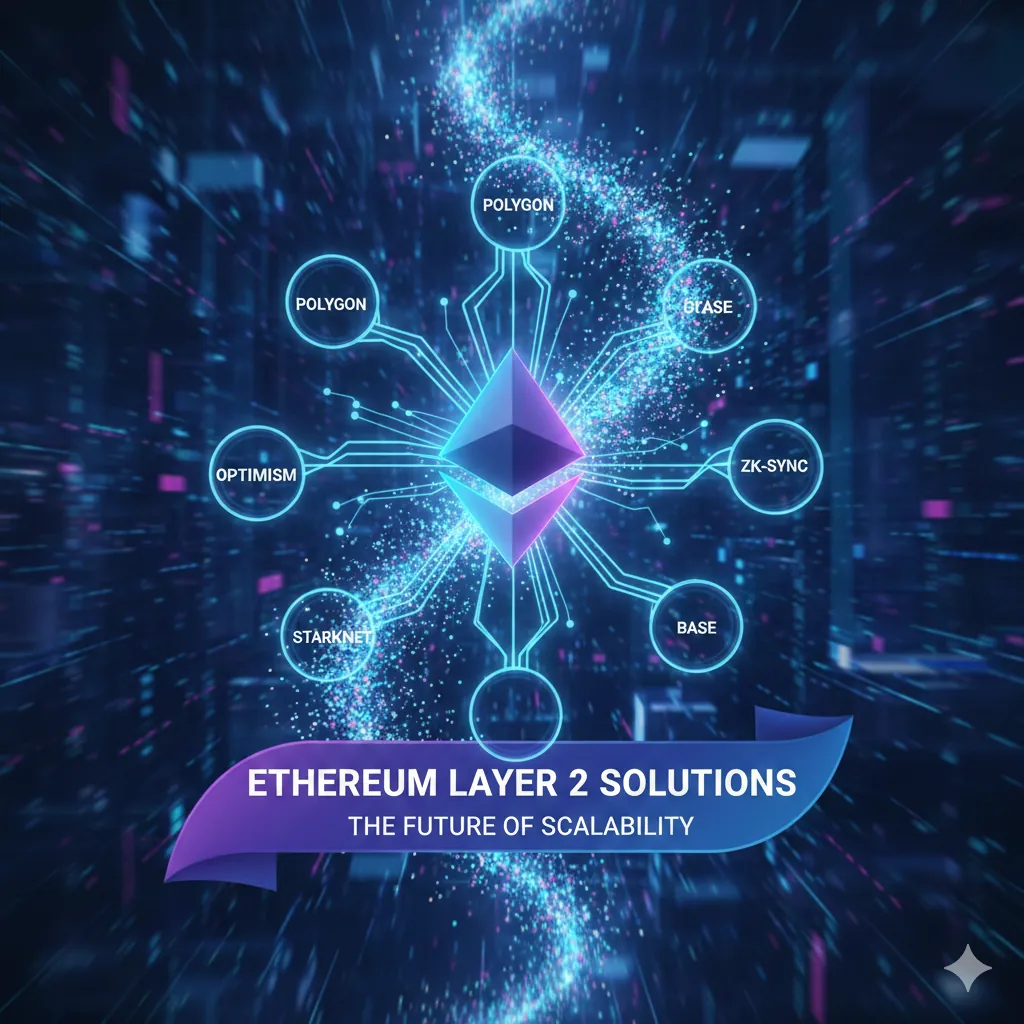
Ethereum Layer 2 solutions process transactions off-chain while inheriting Ethereum's security, delivering 10-100x cost reductions and faster finality. Arbitrum, Optimism, Base, and zkSync Era lead the ecosystem, each suited to different use cases from DeFi to consumer apps to privacy.
Ethereum Layer 2 solutions have become essential for building scalable decentralized applications. By processing transactions off the main chain while inheriting Ethereum's security, L2s offer 10-100x cost reductions and faster finality. Here's everything you need to know for development in 2026.
What Are Layer 2 Solutions?
L2s are separate blockchains that batch transactions and post proofs to Ethereum mainnet. Users get fast, cheap transactions while maintaining Ethereum's security guarantees.
Major L2 Solutions Compared
Arbitrum
- Type: Optimistic Rollup
- TVL: $15B+ (largest L2)
- TPS: ~4,000
- Best for: DeFi, general purpose
- Ecosystem: GMX, Radiant, Camelot
Optimism
- Type: Optimistic Rollup
- TVL: $8B+
- TPS: ~2,000
- Best for: DeFi, governance experiments
- Ecosystem: Velodrome, Synthetix, OP Stack chains
Base
- Type: Optimistic Rollup (OP Stack)
- TVL: $5B+
- Best for: Consumer apps, onboarding
- Advantage: Coinbase integration, fiat on-ramp
zkSync Era
- Type: ZK Rollup
- TVL: $1B+
- Best for: Privacy, faster finality
- Advantage: ZK proofs, native account abstraction
Choosing the Right L2
- DeFi protocols: Arbitrum (deepest liquidity)
- Consumer apps: Base (Coinbase users)
- Privacy needs: zkSync, Scroll
- Gaming: Immutable X, Arbitrum Nova
- Enterprise: Private OP Stack chains
Development Considerations
- EVM compatibility: Most L2s are fully EVM-compatible
- Bridging: Native vs third-party bridges
- Finality: Optimistic (7 days) vs ZK (minutes)
- Data availability: On-chain vs off-chain (validiums)
L2 Development Costs
- Deploy existing contracts: Similar to mainnet
- L2-optimized development: $30,000 - $100,000
- Multi-L2 deployment: $50,000 - $150,000
- Custom L2 (OP Stack/Arbitrum Orbit): $200,000+
Why Choose Weiblocks
At Weiblocks, we build L2-native applications optimized for performance and cost. We help you choose the right L2, architect for multi-chain, and deploy production-ready applications.
Ready to Build on Layer 2?
Contact Weiblocks to discuss your L2 development needs. We'll help you navigate the ecosystem and build scalable applications that leverage the best of Ethereum.