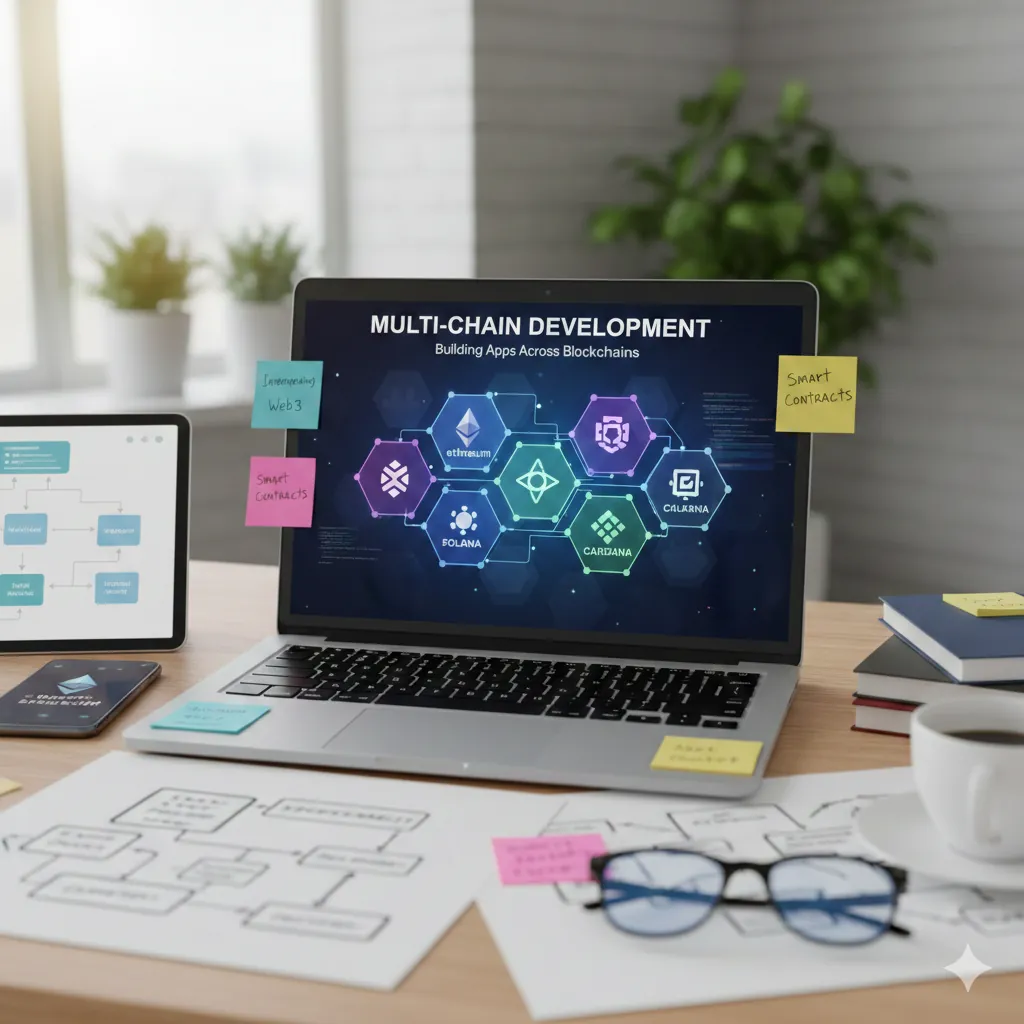
Multi-chain development means building chain-agnostic apps that span Ethereum, Solana, and Layer 2s to maximize reach, liquidity, and resilience using architecture patterns like hub-and-spoke, native multi-chain, and chain abstraction connected by cross-chain messaging.
Multi-chain development has become essential as users and liquidity spread across Ethereum, Solana, and dozens of Layer 2s. Building chain-agnostic applications maximizes reach, liquidity, and user choice. Here's how to do it right.
Why Build Multi-Chain?
- User reach - Meet users where they are
- Liquidity access - Aggregate TVL across chains
- Risk distribution - Not dependent on single chain
- Competitive advantage - Most projects are still single-chain
Multi-Chain Architecture Patterns
1. Hub and Spoke
Deploy a primary instance on one chain with satellite deployments on others. State syncs through messaging layers.
- Best for: DeFi protocols with unified liquidity
- Examples: Aave, Compound multi-chain
2. Native Multi-Chain
Independent deployments on each chain, connected through cross-chain messaging. Each instance is autonomous.
- Best for: DEXs, NFT marketplaces
- Examples: Uniswap, OpenSea
3. Chain Abstraction
Single interface that routes to appropriate chain based on user preference or optimal execution.
- Best for: User-facing applications
- Examples: Socket, LI.FI aggregators
Cross-Chain Messaging
- LayerZero - Most widely adopted, flexible
- Wormhole - Solana native, broad support
- Axelar - Cosmos-based, good for EVM+non-EVM
- CCIP - Chainlink's solution, enterprise focus
- Native bridges - L2-specific (Arbitrum, Optimism)
Development Considerations
Smart Contracts
- Abstract chain-specific logic
- Use consistent deployment addresses (CREATE2)
- Handle different gas models
- Account for finality differences
State Management
- Define canonical state location
- Handle message failures gracefully
- Implement replay protection
- Design for eventual consistency
Security
- Bridge risk is compounded
- Audit cross-chain logic specifically
- Implement rate limiting and caps
- Plan for bridge failures
Multi-Chain Development Costs
- Two-chain deployment: 1.5x single-chain cost
- 5+ chain ecosystem: 2-3x single-chain cost
- Full chain abstraction: 3-4x single-chain cost
Why Choose Weiblocks
At Weiblocks, we've deployed protocols across 10+ chains. We understand the nuances of each ecosystem and build architectures that scale across the multi-chain future.
Ready to Go Multi-Chain?
Contact Weiblocks to discuss your multi-chain strategy. We'll help you architect, develop, and deploy across the chains that matter for your users.